
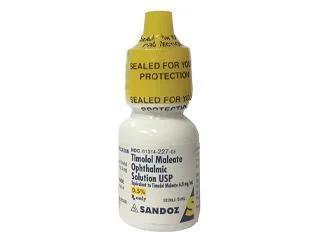
Timolol Eye Drops
Open-angle Glaucoma, Ocular Hypertension
0.5%
Timolol 0.5% eye drops, a beta blocker that lowers eye pressure in open-angle glaucoma and ocular hypertension, the ingredient in Timoptic.
FromUS$7.08/ bottleView
Timolol (often known as Timoptol) is a beta-blocker agent commonly used to reduce high pressure inside the eye. This preparation is a core part of Eye Care for patients managing long-term conditions. It is listed here as Timolol Eye Drops 0.5%; elsewhere it is also combined with brimonidine (Combigan) or dorzolamide (Cosopt).
Open-angle Glaucoma, Ocular Hypertension
0.5%
Timolol 0.5% eye drops, a beta blocker that lowers eye pressure in open-angle glaucoma and ocular hypertension, the ingredient in Timoptic.
Timolol functions as a beta-adrenergic blocking agent. It acts specifically on the eye to manage internal pressure levels that, if left unaddressed, may impact vision over time. Because it is a well-established medication, it is often available in various branded and generic preparations to suit different medical requirements.
This medication addresses high intraocular pressure, which is a primary factor in the development and progression of Glaucoma. It is typically utilised to manage Open-angle Glaucoma and Ocular Hypertension. By maintaining consistent pressure levels, it supports the patient’s long-term eye health.
The medication works by decreasing the rate at which fluid is produced within the eye. This reduction in fluid volume lowers the strain on the eye structures and maintains the pressure at an appropriate level. As a topical beta-blocker, it is designed for direct application to the eye, allowing for targeted action without significant systemic effects.
You may encounter various branded products, such as Timoptol or combination agents like Dorzolamide/timolol. Clinicians often choose between these based on individual response profiles. The medication is prepared as an eye drops solution. This form allows for consistent delivery directly into the eye.
Verify your existing medical history, particularly concerning cardiovascular or respiratory issues. Confirm the correct strength with your provider, as different solutions have variations in concentration.
Some users might experience temporary stinging or watery eyes immediately after application. If persistent redness, irritation, or blurred vision occurs, discontinue use and evaluate with a clinical specialist.
Other eye-area medications may interact with this solution. Disclose all currently used eye drops to your healthcare provider to ensure there are no compounding issues or absorption complications.
Product labelling and verified clinical sources remain the correct references for specific contraindications, interactions and reactions.
Last updated